
Is Your Child Facing Criminal Charges in Las Vegas, NV? Here’s How a Juvenile Defense Lawyer Can Save Their Future
For Parents in Las Vegas, NV: What This Page Covers and Why It Matters
This page is designed specifically for parents in Las Vegas, NV who are seeking a juvenile defense lawyer to help their child. Here, you’ll find essential information about juvenile charges, the court process, defense strategies, and how legal counsel can help protect your child’s future. Understanding these topics is crucial because the juvenile justice system is complex and can have lasting consequences on your child’s education, career, and life opportunities. With the right guidance and representation, you can minimize the impact of charges and give your child the best chance at a second chance.
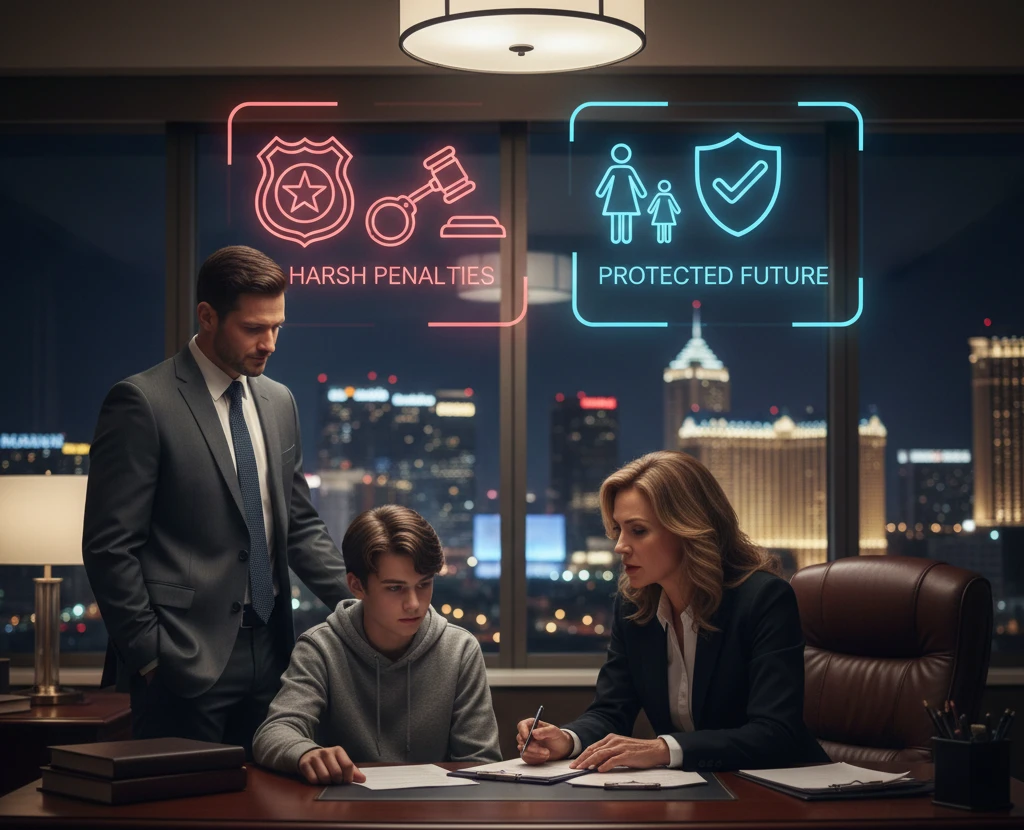
How a Juvenile Defense Lawyer in Las Vegas Can Help Your Child
Juvenile defense lawyers in Las Vegas help minors navigate the juvenile justice system, provide legal representation to ensure their rights are protected, and work to minimize the impact of charges on their future. Having an experienced attorney by your side is essential for understanding the process, advocating for your child, and seeking the best possible outcome.
The Phone Call No Parent Wants to Get
It is the middle of the day. Or maybe it is late at night. The phone rings. It isn’t a friend. It’s the police. Or maybe it’s the school principal.
A police officer tells you your child has been arrested or detained.
Your stomach drops. Your heart starts racing. You feel scared, angry, and confused all at the same time.
My name is Attorney Michael Gowdey, a juvenile defense lawyer in Las Vegas, NV, and for over 30 years, I have been helping families in Las Vegas, Henderson, and North Las Vegas get through the scariest moments of their lives.
When your kid makes a mistake, it shouldn’t ruin their whole life. Kids are supposed to learn from mistakes, not be destroyed by them. But the legal system can be tough. It can be confusing. And if you don’t have someone on your side who knows how it works, a simple mistake can turn into a permanent criminal record.
At The Law Offices of Michael I. Gowdey, Ltd., we fight for your family. We are highly rated, we have won multiple awards, and most importantly, we know how to protect your child.
This guide is going to explain exactly what you are facing. We are going to talk about drugs, school trouble, driving mistakes, and how we can use special programs to keep your child’s record clean.
Some of the Juvenile Crimes We Handle
Juvenile Drug Crimes (Possession & Sales)
Underage DUI & Driving Offenses
How Is Juvenile Court Different From Adult Court in Nevada?
Many parents think juvenile court is just like what they see on TV shows like Law & Order. It isn’t.
Juvenile law in Nevada features different terminology and procedures compared to adult law. For example, juvenile cases use terms like “adjudication” instead of “conviction” and “disposition” instead of “sentencing”. The procedures and terminology are different from adult court.
Juvenile Court Terminology
- Adjudication: This is the process where the court determines whether the minor committed the alleged offense. It is similar to a “conviction” in adult court, but the term is different to reflect the focus on rehabilitation.
- Disposition: This refers to the outcome or sentence in a juvenile case. Instead of “sentencing,” the court issues a “disposition,” which may include probation, community service, counseling, or other rehabilitative measures.
Rehabilitation vs. Punishment
There are major differences between the juvenile court system and the adult system in Nevada. These two criminal systems operate under different structures and goals within the broader criminal justice system. While the adult system focuses primarily on punishment, the juvenile court system emphasizes rehabilitation and teaching positive behavior. Juvenile law is designed to protect minors and provide them with opportunities for reform, rather than simply imposing penalties. Other major differences include the absence of jury trials in juvenile cases and unique procedures that set juvenile courts apart from adult criminal systems.
In adult court, the goal is often punishment. If you do the crime, you do the time.
In Nevada juvenile court, the goal is supposed to be rehabilitation. That is a big word that just means “fixing the behavior.” The system wants to teach the child a lesson so they don’t do it again, rather than just locking them up.
However, do not let that fool you. The consequences are still very real.
The "Label" Matters
In adult court, you are found “Guilty” or “Not Guilty.” In juvenile court, a child is found “Delinquent” or “In Need of Supervision.”
While “delinquent” sounds better than “guilty,” it can still hurt.
- It can stop your child from getting into college.
- It can stop them from joining the military.
- It can make it hard to get a job.
Why Legal Representation Matters
According to data from the Clark County Department of Juvenile Justice Services, thousands of kids are referred to the system every year. But here is a stat very few people talk about: Kids who have a private lawyer are often more likely to get into diversion programs than kids who just go with the flow.
Why? Because we know what to ask for. We know the judges. We know the prosecutors. We know the system in Las Vegas and North Las Vegas inside and out. Having an experienced attorney and specialized legal representation from a Vegas juvenile defense attorney can make a critical difference in protecting your child’s rights and achieving the best possible outcome.
You need to act fast. If your child is in trouble, contact us at Gowdey Law immediately.
What Happens If My Child Is Facing Juvenile Drug Charges?
This is one of the most common reasons parents call my office.
Maybe your teenager was at a party in Summerlin. Maybe they were hanging out at a park in Henderson. Police find marijuana, pills, or something else in their backpack. The alleged offense can result in juvenile charges, which must be handled carefully.
You might be angry at your child. That is normal. But right now, you need to be their protector.
Common Drug Charges
- Possession: Having drugs for personal use.
- Distribution (Sales): Giving or selling drugs to others, which can include simply sharing.
Possession vs. Distribution
There is a big difference between having drugs and selling drugs.
- Possession: This means they had it for themselves.
- Distribution (Sales): This means they were giving or selling it to others.
Here is the scary part: Sharing is often treated like selling. If your child gives a pill to a friend at school, the police might charge them with distribution. That is a much more serious charge.
Fentanyl Risks
We have to talk about this. Fentanyl is very dangerous. It is being found in fake pills all over Las Vegas. Because it is so deadly, prosecutors and judges are being very strict. If your child is caught with anything that looks like a prescription pill, the court will take it very seriously.
Defense Strategies
When you hire The Law Offices of Michael I. Gowdey, Ltd., we look at the details:
- Did the police have a right to search? Just because your child is young doesn’t mean they don’t have rights. If the police searched their backpack illegally, we can fight to get the evidence thrown out.
- Was it actually theirs? Kids often hold things for friends. If your child was holding a bag for someone else, they shouldn’t be punished for it.
We also look for treatment options. Instead of punishment, we argue for counseling. We show the judge that your child needs help, not a cage.
An experienced juvenile defense lawyer can guide families through the legal process, helping them understand each step and working to achieve the best possible outcome for their child.
Why Are School Threats and Vandalism Taken So Seriously Now?
Things have changed. Twenty years ago, if a kid got into a fight or wrote something mean on a bathroom wall, they got detention.
Today, if a student makes a threat—even a joke—on social media like Snapchat or Instagram, they can be arrested for a felony. Such actions are considered criminal offenses under Nevada law, and may be classified as misdemeanors, gross misdemeanors, or felonies depending on the circumstances.
Terroristic Threats
In Nevada, making a threat to cause bodily harm or damage a school is a serious crime. The Clark County School District (CCSD) has a “zero tolerance” policy.
Here is a fact many parents miss: Your child does not have to have a weapon to be charged. If they post a picture of a gun (even a toy one) with a caption that sounds scary, the police will come to your house. They will arrest your child.
Vandalism Consequences
“Tagging” or breaking school property is also serious.
- If the damage is expensive to fix, it can be a felony.
- Parents (that means you) can be forced to pay for the damage.
Defense Approaches
We see a lot of good kids get caught up in this. They make a dumb joke online. They didn’t mean to hurt anyone. We work to show the context.
- Was it clearly a joke?
- Does the child have no history of violence?
- Was it a misunderstanding?
We fight to keep these charges off their record so one bad text message doesn’t ruin their future, always working toward a favorable outcome for your child.
Can My Teenager Go to Jail for Underage DUI or Alcohol Possession?
Driving is a huge responsibility. In Las Vegas, we have strict laws about drinking and driving. For teenagers, the laws are even stricter. Underage DUI or alcohol possession can lead to serious consequences, including license suspension, fines, mandatory education programs, and a criminal record that may impact future opportunities.
Zero Tolerance Laws
For adults over 21, the legal limit for alcohol is 0.08%. For drivers under 21, the limit is 0.02%.
That is almost nothing. One beer could put a teenager over the limit.
Consequences of Underage DUI
- License Suspension: They will lose their license. For a teenager, this feels like the end of the world. It also makes it hard for them to get to school or work.
- Insurance Rates: Your car insurance will skyrocket.
- Criminal Record: A DUI stays on your record. It can’t be “sealed” (hidden) for a long time.
Minor in Possession
Even if they aren’t driving, just holding a beer can be a crime. This is called “Minor in Possession.” While it might seem small, it is still a criminal charge. It creates a record.
Defense Tactics
When we defend an underage DUI, we look at the science. Breathalyzers can be wrong. Field sobriety tests (walking the line) are hard for anyone to do when they are nervous.
We also look at the traffic stop. Did the officer have a valid reason to pull them over? If not, the whole case could be dismissed.
At Gowdey Law, we have handled countless DUI cases. We know the science, and we know the law.
How Can Diversion Programs Save My Child’s Future?
This is the most important section of this page. If you remember one thing, remember this word: Diversion.
Diversion is a “Second Chance” program. The juvenile system in Nevada is designed to provide opportunities for rehabilitation through programs like diversion, focusing on helping minors avoid the long-term consequences of the adult criminal justice system.
What is Diversion?
It is a deal we make with the court. The deal usually looks like this:
- The child agrees to do certain things (community service, counseling, good grades, drug tests).
- In exchange, the court agrees to DISMISS the charges.
If your child completes the program, it is like the arrest never happened. The record is clean. They can say “No” when a college asks if they have ever been convicted of a crime.
Eligibility for Diversion
Not everyone gets it automatically. You have to ask for it. And sometimes, you have to fight for it.
- First-time offenders have the best chance.
- Good grades
- Having a good lawyer helps the most. Hiring an attorney with extensive experience defending minors in juvenile cases is crucial, as they understand the unique challenges of the juvenile justice system and can effectively advocate for your child.
Why? Because we know how to present your child to the judge. We don’t just say, “He’s a good kid.” We build a package. We get letters from teachers. We show proof of their hobbies and sports. We show the judge that this crime was a one-time mistake, not who they really are.
Informal Supervision
In Nevada, there is also something called “Informal Supervision.” This happens before the case even goes to a judge. A probation officer monitors the child for a few months. If they stay out of trouble, no charges are ever filed. Getting this result takes negotiation. Informal supervision can play a key role in detention decisions, as it may allow a minor to avoid being detained while their case is resolved. It takes an attorney who knows who to call at the Clark County Juvenile Justice Services.
Why Should I Hire The Law Offices of Michael I. Gowdey, Ltd.?
There are a lot of lawyers in Las Vegas. Why should you trust us with your child’s future? As a leading juvenile defense lawyer and provider of Las Vegas juvenile defense services, our firm is recognized for its experienced juvenile defense counsel dedicated to protecting minors’ rights and securing the best possible outcomes for young clients.
30+ Years of Experience
I have been doing this for over three decades. I have seen every type of case. I have seen every judge. I have extensive experience working with and against the district attorney in juvenile cases. Nothing surprises me. When your child’s future is on the line, you don’t want a lawyer who is learning on the job. You want someone who has been there before.
We Know Local
We aren’t a big national chain. We are local. We work in Las Vegas, Henderson, and North Las Vegas every day. We know the local rules. We know the local programs.
Highly Rated and Award Winning
We are proud of our reputation. We work hard for our reviews. We treat every client like family because we know how stressful this is.
We Handle Family Law Too
Sometimes, juvenile trouble comes from family trouble. Maybe there is a divorce happening. Maybe there are custody issues. Because we also handle Family Law cases, we understand the big picture. We can help your family heal, not just fight a court case.
We Are Honest
I will tell you the truth. I won’t promise you a miracle if I can’t deliver it. But I will promise to work harder than anyone else to get the best possible result for your child.

Key Takeaways for Parents
If you are skimming this page, here are the most important things to know:
- Don’t Panic: Arrest is not a conviction. There is a long way to go.
- Don’t Let a Mistake Ruin Your Child’s Future: A single mistake shouldn’t ruin your child’s life. Get legal help to protect their future.
- Don’t Let Them Talk: Tell your child to be polite to the police but to remain silent. They should not answer questions without a lawyer.
- Juvenile Court is Different: The goal is rehabilitation, but the consequences are real.
- Drugs & Threats are Serious: Schools and courts are cracking down on these charges.
- Diversion is the Goal: We want to keep your child’s record clean.
- Hire Experience: You need a lawyer with a track record of success in Nevada.
Start Protecting Your Child’s Future Today
Your child made a mistake. Do not let the legal system define them by their worst day. Protect his or her future—they have a whole life ahead of them.
At The Law Offices of Michael I. Gowdey, Ltd., we are ready to fight for your family. We have the experience, the knowledge, and the passion to get the best results.
Don’t wait. The sooner we get involved, the more we can do to help.
Call us today or visit our contact page to schedule a consultation. Let us handle the legal stress so you can focus on being a parent.
Disclaimer: The information provided on this website does not, and is not intended to, constitute legal advice; instead, all information, content, and materials available on this site are for general informational purposes only. Information on this website may not constitute the most up-to-date legal or other information.
FAQS
Frequently Asked Questions (FAQs) for Las Vegas Juvenile Lawyers
Here are the 10 most common questions parents ask me when they walk into my office.
1. Will my child go to “Juvie” (Juvenile Detention)?
Answer: Most of the time, for first offenses, the answer is no. We fight to keep kids at home with their parents. Detention decisions are usually reserved for juvenile offenders involved in violent crimes or kids who keep getting in trouble.
2. Does a juvenile record disappear when they turn 18?
Answer: No. This is a huge myth! In Nevada, juvenile records do not automatically seal when a child turns 18. You must file a petition to seal the records. If you don’t, that record stays there and can impact future opportunities, including college admissions. We help clients seal their records so they can move on as adults.
3. Can the school punish my child for something that happened on the weekend?
Answer:Yes, sometimes. If the conduct (like a cyberbullying threat) impacts the school environment, the Clark County School District can suspend or expel a student, even if it happened off-campus. Even if the alleged crime did not occur at school, the school may still take action, so it’s important to protect your child’s case.
4. Do I (the parent) have to pay for a lawyer?
Answer: You have the right to a public defender if you cannot afford a private lawyer. However, public defenders have huge caseloads. A private attorney like Michael Gowdey can give your case more time and attention. We provide legal representation for juvenile cases and offer a confidential consultation to discuss your options.
5. Can my child be tried as an adult?
Answer: In Nevada, for very serious crimes (like murder, attempted murder, or sexual assault), a child can be “certified” as an adult through a certification hearing. In certain circumstances, such as when the alleged crime is especially severe, the case may be transferred from juvenile court to criminal court. This is rare, but it is the scariest part of the law. You absolutely need an experienced lawyer if this is on the table, especially since being tried as an adult can affect your child’s immigration status and future.
6. What if my child needs drug rehab?
Answer: The court often looks favorably on this. If we can get your child into a treatment program before the judge orders it, it shows we are taking responsibility. It can help the case. In juvenile law, addressing underlying issues in criminal cases, like substance abuse, can lead to better outcomes and may keep the case in juvenile court.
7. How long does a juvenile case take?
Answer: It is usually faster than adult court. Juvenile cases involve court hearings, not jury trials, and each court date is important. The legal process typically takes a few months. We guide you through each step and help you prepare for all court hearings to resolve your child’s case as quickly as possible.
8. Can I speak for my child in court?
Answer: You will be in the courtroom. The judge will likely ask you questions. It is important to show the judge that you are a concerned, involved parent who is disciplining your child at home. However, your child’s rights must be protected throughout juvenile proceedings, and we ensure fair treatment for every family.
9. What is a “Deferred Adjudication”?
Answer: This is similar to diversion. The judge puts the case on “pause.” If your child stays out of trouble for 6 months or a year, the charges are dropped. This is a favorable outcome we fight for in juvenile proceedings, as it can help protect your child’s future and limit the impact on things like college admissions.
10. How much does a juvenile defense attorney cost?
Answer: Every case is different. It depends on the charges and how complex the case is. At Gowdey Law, we offer consultations to discuss fees and payment options. We believe great defense should be accessible for accused minors, and experienced juvenile defense counsel can make a significant difference in the outcome.