
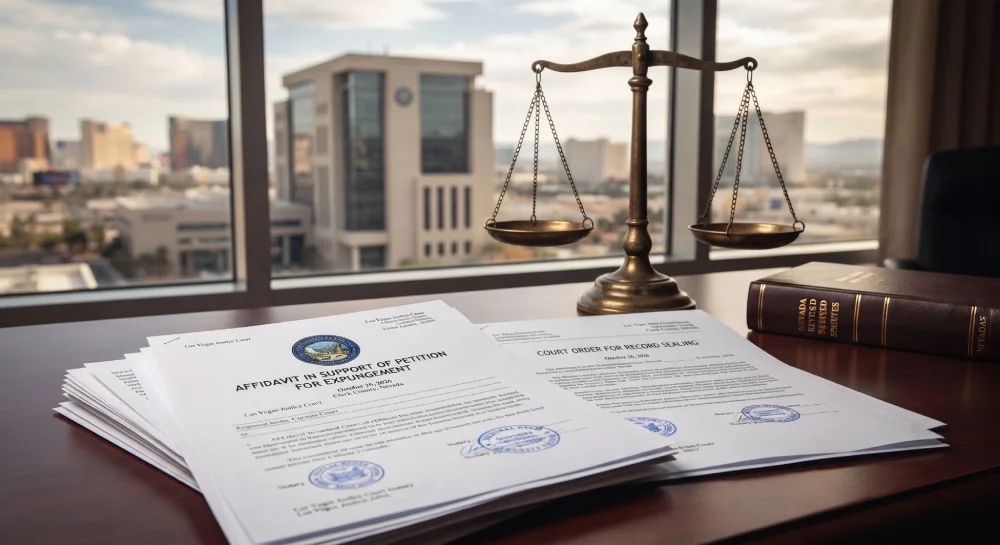
Making a mistake when you were young—or going through a dark period that resulted in a criminal conviction—should not sentence you to a lifetime of economic punishment. Every day, hard-working people in North Las Vegas, Henderson, and across Clark County lose out on job promotions, professional licenses, and rental housing because an old conviction pops up on a routine background check.
Many clients ask me about “expungement.” While Nevada law does not technically expunge (destroy) records, it seals them so completely that employers, landlords, and the general public can no longer see them.
As a trial attorney with decades of experience, I help clients navigate NRS 179.155 to wipe the slate clean.
Key Takeaways
- Sealing vs. Expungement: Nevada seals criminal records rather than destroying them, removing them from public background checks.
- Mandatory Waiting Periods: You must wait a specific amount of time after completing your sentence, probation, or parole before petitioning the court.
- Restored Rights: Once sealed, you can legally state on most job applications that you have never been convicted of that crime.
What is the waiting period to seal a criminal record in Nevada?
Nevada waiting periods range from two years for minor misdemeanors up to ten or more years for category A and B felonies, calculated from the date your probation, parole, or sentence is fully completed.
Under Nevada law, you cannot file a petition the moment your criminal case ends. The legislature established mandatory waiting periods to ensure that petitioners demonstrate a sustained period of law-abiding behavior before the state grants a clean slate.
These waiting periods begin ticking only after you have fully completed all sentencing requirements, including paying court fines, finishing probation, completing community service, and finishing mandatory counseling.
If you pick up a new arrest or conviction while waiting out the clock, the statutory waiting period resets entirely.
Knowing the exact statute of limitations and waiting periods for your specific charge under NRS 179.245 is critical. Filing prematurely results in immediate court rejection, wasting precious time and money.
My office audits your complete criminal history to calculate exact eligibility dates down to the day.
How does the Nevada record sealing process work?
The Nevada record sealing process requires obtaining your official criminal history from local law enforcement, drafting a formal petition, notifying the prosecuting attorney, and securing a court order signed by a district or municipal judge.
Cleaning your criminal record is a precise legal procedure requiring meticulous paperwork across multiple government agencies.
First, my office pulls your complete criminal history and arrest records from agencies like the Las Vegas Metropolitan Police Department and the Nevada Department of Public Safety.
Next, we draft a formal legal petition showing the court that you have successfully rehabilitated yourself and that sealing the record is in the interest of justice.
We serve copies of the petition to the prosecuting attorney’s office that handled your original case—whether that is the Clark County District Attorney, the Las Vegas City Attorney, or Henderson prosecutors.
If the prosecutor does not object, or if we successfully argue your case before a judge at a hearing, the court signs an order sealing the record.
Finally, we distribute certified copies of the court order to every state, local, and federal repository to ensure the record vanishes from public view.
Nevada Record Sealing Waiting Periods at a Glance
| Offense Category | Statutory Waiting Period (NRS 179.245) |
| Minor Misdemeanors / Citations | 1 to 2 years after case closure. |
| Standard Misdemeanors | 2 years after sentence completion. |
| Gross Misdemeanors | 5 years after sentence completion. |
| Category D, E, and Certain C Felonies | 5 to 7 years after sentence completion. |
| Serious Felonies (Category A, B) | 10 years or more (certain violent or sex crimes are permanently ineligible). |
Why Clearing Your Record Changes Everything
A criminal record acts as an invisible anchor dragging down your professional and personal life.
When applying for corporate management positions in Summerlin, opening a business in Henderson, or attempting to lease an apartment in North Las Vegas, third-party background screening companies scrape old courthouse databases.
Even if a case was dismissed years ago, the raw arrest record can scare away employers who do not understand the difference between an arrest and a conviction.
By securing a formal record seal under Nevada law, you regain your peace of mind. Under NRS 179.285, once a record is sealed, the official response to any inquiry is that no such record exists.
You can legally answer “no” on employment applications asking about past convictions, freeing yourself from the stigma of yesterday’s mistakes.
Frequently Asked Questions
1. Does a record sealing completely erase my arrest history?
It seals the record from public view, meaning private employers and landlords cannot see it. Law enforcement and certain government agencies can still view sealed records under specific statutory exceptions.
2. Can I seal a DUI conviction in Nevada?
Most first- and second-offense misdemeanor DUIs can be sealed, but you must wait a mandatory seven-year period from the date of conviction.
3. What if my case was dismissed?
If your criminal case was dismissed or you were acquitted at trial, you can typically petition to seal the arrest record with no waiting period.
4. Do I need to appear in court for a record sealing?
Usually, no. Judges routinely grant record-sealing petitions based on written legal motions submitted by your attorney without requiring your physical presence.
5. Where do I file a record sealing petition in Clark County?
Petitions are filed either in the Eighth Judicial District Court or the specific municipal court where the original conviction occurred.
6. Can I own a firearm after my record is sealed?
Sealing a record does not automatically restore federal gun rights if the underlying conviction was a felony or domestic violence offense; that requires a separate pardon from the Nevada Board of Pardons Commissioners.
7. How long does the entire record sealing process take?
From initial paperwork to final court clearance, the process typically takes between three to six months due to administrative processing times across multiple agencies.
About the Author: Attorney Michael I. Gowdey & Record Rehabilitation
For over 30 years, Attorney Michael I. Gowdey has believed that a single past mistake should not dictate a person’s entire economic future. Specializing in Nevada record sealing and expungement under NRS 179.155, Mr. Gowdey works closely with individuals throughout Clark County to calculate exact statutory waiting periods, audit criminal histories, and secure formal court orders that wipe slates clean. His commitment to rehabilitation helps hardworking Nevadans unlock new employment, housing, and professional licensing opportunities.
Call to Action
Do not let your past define your future earnings and housing options.