
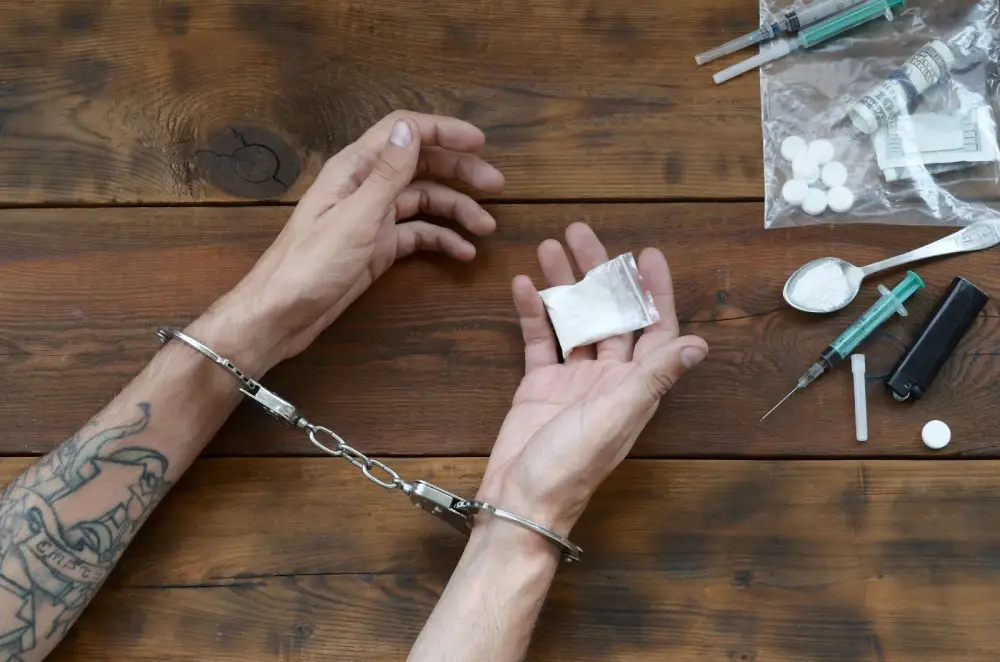
Are you worried about drug charges in Nevada? Whether you live in Las Vegas, Henderson, or North Las Vegas—or you’re just visiting—the weight of drugs you’re caught with can mean the difference between probation and years in prison. This page explains Nevada’s drug possession weight limits for 2026, including the new 100-gram rule and how it affects charges in Las Vegas. Understanding these limits is crucial for anyone facing or concerned about drug charges in Nevada, as it can help you avoid severe penalties or take advantage of new legal protections under the updated laws.
My name is Michael Gowdey, and I’ve been defending the accused in Las Vegas, Henderson, and North Las Vegas for over 30 years. At The Law Offices of Michael I. Gowdey, Ltd., we have won awards for taking on the toughest cases. We know that a mistake shouldn’t ruin your whole life. Our lawyers are experts at navigating the “New Nevada” laws to keep you out of prison and keep your record clean. Hiring an experienced attorney or criminal defense lawyer is crucial for successfully handling Las Vegas criminal defense cases under these new laws.
Key Takeaways: The 2026 Drug Law Shuffle
- The 100-Gram Rule: You now need to have 100 grams of most drugs to be charged with “low-level” trafficking. It used to be just 4 grams.
- Mandatory Diversion: For first-time possession of less than 14 grams, the judge must give you a chance to earn a dismissal.
- Resort Corridor Court: If you are arrested on the Strip, you might face a special court designed just for tourists and casino visitors.
- Fentanyl is Different: The rules for Fentanyl are much stricter than for other drugs like cocaine or meth.
- We are Local: We represent the accused across the whole valley—Las Vegas, Henderson, and North Las Vegas.
How Many Grams is a Felony in Nevada?
In Nevada, almost all drug possession is technically a felony. But don’t panic! There is a huge difference between a “possession” felony and a “trafficking” felony.
In 2026, the law says that if you have less than 14 grams of a Schedule I or II drug (like cocaine or heroin) and it’s your first time, you are eligible for a program that wipes the charge away. Nevada law also requires mandatory probation for certain first-time offenses. However, once you hit the 100-gram mark, you aren’t just “possessing” anymore—the law says you are “trafficking.” Certain drug offenses may be charged as a category C felony or category D felony depending on the drug type and amount, with potential penalties ranging from 1 to 5 years in prison and fines for category D felonies, and 1 to 5 years (or more) and higher fines for category C felonies.
The “Old” vs. “New” Trafficking Rules
Before the recent updates, if you had just 4 grams of a drug, you were facing 1 to 6 years in prison. That’s about the weight of four paperclips! Now, the best news for the accused is that the “Low-Level Trafficking” floor has been raised to 100 grams. This change was made to stop people with small personal amounts from being treated like cartel leaders.
Now that you understand how the law has changed, let’s look at how these rules apply in real-world situations.
Nevada Drug Possession Weight Limits (2026 Edition)
Understanding the exact weight limits for drug possession in Nevada is essential for anyone facing charges or trying to avoid them. The penalties depend on both the type of drug and the amount involved. Below, you’ll find a summary table and detailed breakdowns for Schedule I/II drugs, marijuana, and fentanyl.
Summary Table: 2026 Nevada Drug Possession Weight Limits & Penalties
| Drug Type | Possession Limit (Felony Category) | Trafficking Thresholds & Penalties |
| Schedule I/II Drugs | < 14g: Cat. E felony (probation) | 100–400g: Cat. B felony (2–20 yrs, up to $100k) |
| 14–<28g: Cat. C felony (1–5 yrs, $10k) | ≥400g: Cat. A felony (25 yrs–life, up to $500k) | |
| 28–<42g: Cat. B felony (1–10 yrs, $50k) | ||
| 42–<100g: Cat. B felony (2–15 yrs, $50k) | ||
| Marijuana (Flower) | ≤2.5 oz: Legal for adults 21+ | ≥50 lbs: Trafficking (Cat. C/B/A felony) |
| >2.5 oz: Misdemeanor | ||
| Marijuana (Concentrate) | ≤1/4 oz: Legal for adults 21+ | ≥1 lb: Trafficking (Cat. C/B/A felony) |
| >1/4 oz: Misdemeanor | ||
| Fentanyl | <14g: Cat. E felony (probation) | ≥28g: Trafficking (Cat. B/A felony) |
| 14–<28g: Cat. C felony (1–5 yrs, $10k) |
Schedule I and II Drugs
- Less than 14 grams: Category E felony (usually probation)
- 14 grams to less than 28 grams: Category C felony (1–5 years in prison, up to $10,000 fine)
- 28 grams to less than 42 grams: Category B felony (1–10 years in prison, up to $50,000 fine)
- 42 grams to less than 100 grams: Category B felony (2–15 years in prison, up to $50,000 fine)
- 100 grams to less than 400 grams: Low-level trafficking, Category B felony (2–20 years in prison, up to $100,000 fine)
- 400 grams or more: High-level trafficking, Category A felony (25 years to life, up to $500,000 fine)
Marijuana
- Up to 2.5 ounces (flower) or 1/4 ounce (concentrate): Legal for adults 21 and over
- Over 2.5 ounces (flower) or over 1/4 ounce (concentrate): Misdemeanor
- Trafficking (flower): Begins at 50 pounds (Category C/B/A felony depending on weight)
- Trafficking (concentrate): Begins at 1 pound (Category C/B/A felony depending on weight)
Fentanyl
- Less than 14 grams: Category E felony (usually probation)
- 14 grams to less than 28 grams: Category C felony (1–5 years in prison, up to $10,000 fine)
- 28 grams or more: Trafficking (Category B or A felony, with severe penalties)
These thresholds are strictly enforced, and crossing from one category to another can mean a dramatic increase in penalties. Knowing these limits can help you understand your legal risks and options.
Now that you know the specific weight limits and penalties, let’s explore how Nevada law defines possession and how these rules are applied in practice.
What is the Difference Between Drug Trafficking vs. Possession in Nevada?
The main difference is intent and weight.
- Possession (NRS 453.336): This is for personal use. It’s usually a Category E felony, which is the “lightest” felony. Nevada law classifies controlled substances into different schedules, and which schedule a drug belongs to is determined by criteria set by the federal Controlled Substances Act and the Nevada Administrative Code (NAC Chapter 453). For example, Schedule I and II drugs are considered the most serious. Schedule II drugs include substances like Cocaine, Oxycodone, and Methamphetamine. Possessing or selling schedule II substances can result in severe penalties under Nevada drug laws. Prescription drugs, such as Xanax or OxyContin, are also controlled substances and can lead to drug offenses if possessed without a valid prescription. Schedule III drugs (such as anabolic steroids and Ketamine) and schedule IV drugs (such as Xanax and Valium) are classified based on their potential for abuse and accepted medical use, with penalties that are generally less severe than those for Schedule I or II drugs. The criminal justice system handles drug crimes, including nevada drug charges and nevada drug crimes, by applying these classifications to determine legal consequences, available defenses, and sentencing options.
- Trafficking (NRS 453.3385): This is for selling or moving large amounts. It starts at a Category B felony and goes all the way up to Category A (the same level as murder).

Understanding Actual or Constructive Possession
When it comes to drug possession charges in Las Vegas, one of the most misunderstood—and most important—concepts is the difference between actual and constructive possession. Under Nevada drug laws, you don’t have to be caught with drugs in your pocket to be charged with possession of a controlled substance. The law recognizes both “actual” and “constructive” possession, and understanding the difference can make or break your case.
- Actual possession: You physically have the controlled substance on you—maybe in your hand, your backpack, or your jacket.
- Constructive possession: You can be charged if you have control or the right to control the drugs, even if they aren’t physically on you. For example, if law enforcement officers find illegal drugs in a car you’re driving, or in a storage unit you rent—even if you weren’t holding them—you could be accused of constructive possession.
- Joint possession: If you and a friend both have access to a stash of controlled substances, Nevada law may charge both of you, even if only one person actually handled the drugs.
These distinctions matter because:
- Prosecutors often try to stretch constructive possession to cover as many people as possible, especially in cases involving vehicles, shared apartments, or group settings.
- Having an experienced Nevada criminal defense attorney is critical—they know how to challenge the prosecution’s claims and build a robust defense strategy.
- Sometimes, the best defense is showing you had no knowledge or control over the drugs, or that your connection was too remote to count as possession under Nevada law.
The type of controlled substance also plays a big role:
- Nevada law classifies drugs into schedules based on their accepted medical use and potential for abuse.
- Schedule I drugs (like heroin or LSD) have no accepted medical use and carry the harshest penalties.
- Schedule III, IV, or V drugs (such as anabolic steroids or certain prescription medications) may have accepted medical uses and typically result in less severe charges.
- Whether you’re accused of possessing a Schedule I or II controlled substance, or something lower on the list, the consequences can still be life-changing.
First time offenders may have options like the drug court program, which can lead to a dismissal of charges upon successful completion. However, subsequent offenses or larger quantities can quickly escalate to a category B felony, with years in prison on the line.
If you’re caught up in a drug possession case—whether it’s actual or constructive possession—don’t leave your future to chance. The legal system in Las Vegas is complex, and the stakes are high. Reach out for a confidential consultation with a skilled criminal defense attorney who understands Nevada drug laws inside and out. With the right legal representation, you can fight for your rights, challenge the evidence, and work toward the best possible outcome.
Stats Nobody is Talking About: Drug Arrests in Clark County
Resort Corridor Court
Since the revival of the Resort Corridor Court in late 2025, arrests on the Strip have become faster to process, but tougher to fight without a local lawyer.
Conviction Counts
In early 2025, Clark County was reporting over 1,400 narcotics convictions a month. That is nearly 46 people every single day facing drug sentences. Many of these cases result in a criminal conviction, and prior convictions can increase penalties for repeat offenders.
Henderson and North Las Vegas
While crime in North Las Vegas dropped by 6% overall in 2025, drug-related arrests in Henderson stayed steady, especially near the resort areas.
Fentanyl Factor
Over 900 people in Nevada died from opioid overdoses in 2023. Because of this, the police are using lower weights (just 28 grams) to charge people with Fentanyl trafficking.
Third or subsequent offense for drug possession or distribution can lead to harsher penalties under Nevada law, and even simple drug possession can have serious consequences for those convicted.
Why The Law Offices of Michael I. Gowdey, Ltd. is the Best Choice for Your Case
For over 30 years, Michael Gowdey has been the authoritative voice in Las Vegas courtrooms. We don’t just “handle” cases; we win them. We have a deep understanding of and how it affects your whole life, including issues like custody.
Our lawyers look for the “Deal Killers” that make a case fall apart. Did the police weigh the drugs correctly? Did they include the baggie or the glass pipe in the weight? In a world where 1 gram can change your life, those details matter. A skilled defense lawyer or Vegas criminal defense lawyer will challenge evidence obtained through an unlawful search, which can lead to suppression of evidence or dismissal of Las Vegas drug charges. Establishing reasonable doubt is also a key part of defending against Las Vegas drug allegations. We are highly rated and have won multiple awards because we treat every client like family.
10 Common Questions About Drug Charges in Las Vegas
1. Is drug possession a misdemeanor in Las Vegas?
Usually, no. Possession of “hard drugs” is almost always a felony. However, for small amounts, you can get the case dismissed through a program, so it won’t stay on your record. For marijuana possession, Nevada law allows adults 21 and over to possess up to one ounce of marijuana or up to 1/8 ounce of concentrated cannabis, but possessing more than these limits or possessing concentrated cannabis in larger amounts can lead to felony charges with harsher penalties than regular marijuana.
2. What happens if I am caught with drugs in a Henderson casino?
You will likely be arrested by HPD and taken to the Henderson Detention Center. You may also be “ordered out” or banned from the casino property for a long time.
3. Does the 100-gram trafficking rule apply to Fentanyl?
No. Fentanyl has much harsher rules. Trafficking charges for Fentanyl can start at just 28 grams because it is so dangerous ().
4. Can I get my drug charge reduced to a misdemeanor?
Yes. Our lawyers often negotiate with prosecutors to reduce a Category E felony to a misdemeanor “Possession of Drug Paraphernalia” or a similar charge.
5. How do I find the best drug lawyer near me?
You want a lawyer who has been in the local courts for a long time. Michael Gowdey has 30+ years of experience in Las Vegas, Henderson, and North Las Vegas.
6. What if the drugs weren’t mine, but were in my friend’s car?
This is called “Constructive Possession.” The police have to prove you knew they were there and had control over them. We fight these cases by showing you were just a passenger.
7. Will I lose my job if I am charged with a drug felony?
Many jobs in Las Vegas (like gaming or nursing) have strict rules about felonies. Getting a lawyer immediately is the best way to save your career.
8. Is Drug Court the same as regular court?
No. Drug Court is a “Specialty Court” focused on help and rehab. If you finish the program, your charges are typically dismissed.
9. Can the police search my hotel room on the Strip?
Generally, they need a warrant or your permission. If they searched without one, our lawyers will file a motion to toss out the evidence.
10. Why is Michael Gowdey’s firm different?
Because we have 30 years of trust in this community. We aren’t a “plea mill.” We look at every piece of evidence to find a way to win.