
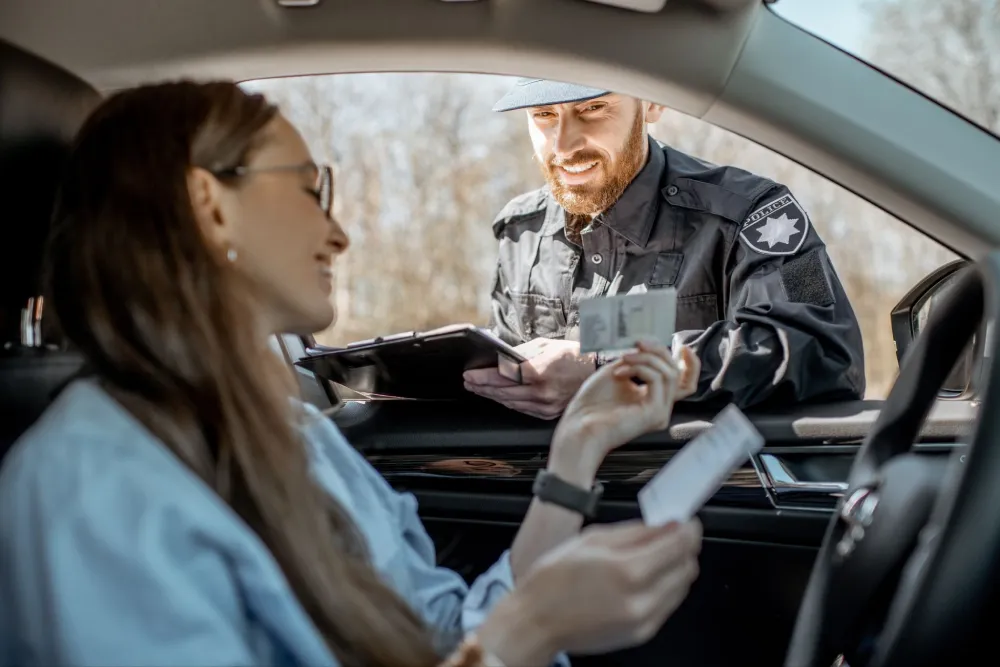
When you’re stopped by police in Nevada, it’s crucial to understand your constitutional rights, including your Fourth Amendment protection against unreasonable searches and seizures and your Fifth Amendment right to remain silent. Encounters with law enforcement can be stressful, but knowing your rights and obligations can help you navigate the situation safely and legally.
Under federal law, as of February 2011, there is no nationwide requirement for individuals to identify themselves during police stops. However, Nevada has enacted its own stop and identify laws, which require you to provide identifying information to police under certain circumstances. These state-specific laws are based on the Supreme Court’s decision in Hiibel v. Nevada and outline when you must show your ID or state your name.
Your legal obligation to identify yourself in Nevada arises from these state stop and identify laws, not from any federal law. During a police encounter, you have the right to remain silent and are not obligated to answer any questions beyond providing your name or basic identifying information as required by Nevada law. Understanding these legal requirements and your rights can help you respond appropriately if you are ever stopped by law enforcement in Las Vegas or anywhere else in Nevada.
Introduction to Police Encounters
When you find yourself interacting with law enforcement officers in Nevada, understanding the nature of the encounter is your first line of defense. Police interactions generally fall into three categories: consensual contact, detention, and arrest. Consensual contact means you’re free to leave at any time—think of an officer approaching you on the street for a casual conversation. Detention, on the other hand, occurs when an officer has reasonable suspicion that you’re involved in criminal activity and temporarily restricts your freedom. Arrest is the most serious, requiring probable cause and resulting in a formal charge.
No matter the situation, you have important rights. You always have the right to remain silent—meaning you don’t have to answer police questions beyond providing your name if legally required. You also have the right to refuse consent to a police search unless the officer has a valid search warrant or another legal basis. Staying calm and politely asserting your rights can make a significant difference in the outcome of a police encounter.
If you’re unsure about your rights or feel overwhelmed during a police stop, reaching out to an experienced criminal defense attorney can be invaluable. A skilled defense attorney can help you navigate the complexities of police conduct and ensure your rights are protected throughout the process. Remember, knowing your rights is the best way to safeguard yourself during any interaction with law enforcement.
Key Takeaways
- The 60-Minute Rule: In Nevada, police can only hold you for up to 60 minutes without arresting you under NRS 171.123.
- Name, Not Papers: You generally have to tell the police your name, but you don’t always have to hand over a physical ID card unless you are driving.
- Nevada law requires residents to obtain and carry identification, such as a state-issued ID or driver’s license, especially when driving.
- Reasonable Suspicion: A cop can’t just stop you because they feel like it. They must have a “reasonable” reason to think you did something wrong.
- Silence is Golden: Once you give your name, you have the right to stop talking. You don’t have to explain where you are going or what you are doing.
Las Vegas vs. Everywhere Else: Metro police in Vegas have specific rules that might feel different from Henderson or North Las Vegas, but the state law stays the same
When can police demand your name in Las Vegas, NV based on reasonable suspicion?
In Nevada, a police officer can only stop and detain you based on reasonable suspicion, which must be established by specific, articulable facts suggesting criminal conduct is occurring or about to occur—not on an obscure assumption, vague hunch, or gut feeling. According to Nevada Revised Statute (NRS) 171.123, if an officer stops you under these suspicious circumstances, you are legally required to identify yourself. The Nevada Supreme Court has ruled that a detainment based on reasonable suspicion should not last longer than necessary, typically not exceeding 60 minutes, and must not extend beyond the location of the initial stop unless an arrest is made. However, identifying yourself usually just means telling them your name—you aren’t always required to show a physical ID card unless you are behind the wheel of a car. If you refuse to give your name when legally required, you could be charged with “obstructing a public officer.”
Hi, I’m Attorney Michael Gowdey. I’ve been helping people in the Las Vegas valley for over 30 years. When you’ve been doing this as long as I have, you see a lot of people get into trouble simply because they didn’t know the “rules of the road” when talking to the police. In a criminal case, the standard for police stops is closely scrutinized, and courts will consider the surrounding circumstances to determine if reasonable suspicion was properly established. Whether you are in downtown Las Vegas, the quiet suburbs of Henderson, or North Las Vegas, the law is the law. But let’s be honest—it can be scary when a badge and a gun are right in your face.
Under Nevada’s stop and identify laws, you are only required to state your name (not provide physical identification) unless you are driving a vehicle. As a pedestrian, you are not required to carry identification or answer questions beyond stating your name, unless the officer is investigating a specific crime.
My firm, The Law Offices of Michael I. Gowdey, Ltd., has won many awards and we are very highly rated because we treat our clients like family. We handle Criminal Defense cases and also help folks with Family Law issues. Today, I want to talk to you like a friend. I want to give you the “lowdown” on Nevada ID laws so you can stay safe and protect your rights.
The Stats Nobody is Talking About
Most people think police stops are going up, but the data shows something different. Did you know that in 2025, homicides in the Las Vegas Metropolitan Police Department (LVMPD) jurisdiction dropped by 22%? According to the Las Vegas Review-Journal, Metro logged only 90 murders in 2025, down from 142 just two years prior.
Why does this matter for ID laws? When crime goes down, sometimes “proactive policing” goes up. This means officers are looking for reasons to stop people before a crime happens. In North Las Vegas, they actually increased the number of patrol officers on the street in 2025 to keep that downward trend going (Source: City of North Las Vegas Police Records). During these stops, officers may attempt to gather evidence of a potential criminal offense, and such stops are often justified not only by stop and identify statutes but also by other laws, such as those prohibiting resisting or obstructing law enforcement.
Here is a stat that will surprise you: While violent crime is down, drug crimes increased by 7% in 2025 across many major cities (Source: Council on Criminal Justice). This means police are often looking for “suspicious behavior” related to drugs, which leads to more people being stopped and asked for their ID. If you are stopped or charged with a criminal offense, consulting a Las Vegas criminal defense attorney is crucial to protect your legal rights.
Do You Actually Have to Carry an ID Card?
This is the big question! In Nevada, there is no law that says a pedestrian must carry identification or physical identification everywhere they go. If you are walking your dog in Henderson and a cop stops you, you don’t have to have your wallet. However, you are required to carry identification when driving, as drivers must present proof of identity and a valid license if stopped by law enforcement.
However, under NRS 171.123, you must identify yourself. This usually means speaking your name clearly. If you lie about your name, that’s a big “no-no” and can get you arrested for providing false information to an officer.
Additionally, Nevada law prohibits holding both a driver’s license and an ID card at the same time.
Driving is Different: When You Must Show Your Driver’s License
If you are operating a motor vehicle, the rules change. When stopped by police while driving, you are legally required to present your driver’s license, vehicle registration, and proof of insurance upon request. You are not required to answer any additional questions beyond providing these documents. Photocopies are not accepted for identity document verification in Nevada. According to the Nevada DMV, the state is moving toward “REAL ID” requirements: REAL ID-compliant cards, marked with a gold star, will be mandatory for federal identification purposes such as boarding domestic flights as of May 7, 2025. After this date, standard Nevada IDs will no longer be accepted for boarding aircraft without additional federally approved identification. To obtain a state identification card in Nevada, you must provide proof of identity, proof of Social Security number, and two proofs of Nevada residency, such as a utility bill or bank statement dated within the last 60 days. Nevada IDs are valid for 8 years for individuals under 65 and 4 years for those 65 and older. For a traffic stop, a standard driver’s license still works (Source: Nevada DMV Real ID Guidelines).
The “Stop and Frisk” Rule in Nevada
Can they search you? Not just because they asked for your name.
Under NRS 171.1232, an officer can only “frisk” or pat you down if they reasonably believe you have a dangerous weapon and are a threat to their safety.
- The Law: They can’t just dig in your pockets for drugs.
- The Reality: If they feel something that is “immediately apparent” as contraband (like a pipe or a baggie) during a weapons pat-down, they might try to seize it.
I’ve seen many cases where the police overstepped. If they searched you without a good reason, we can often get that evidence thrown out of court. That’s where having an experienced attorney makes a huge difference.
Understanding Lawful Arrest
A lawful arrest in Nevada hinges on the concept of probable cause—a standard that goes beyond mere reasonable suspicion. While reasonable suspicion allows law enforcement officers to briefly detain you for investigation, probable cause requires concrete evidence or facts that would lead a reasonable person to believe a crime has been committed. This higher threshold is what separates a temporary stop from a full arrest.
The Nevada Supreme Court has set clear guidelines to ensure that arrests respect your constitutional rights. Officers must be able to articulate specific facts that justify taking you into custody. If you are lawfully arrested, it’s crucial to immediately invoke your right to remain silent and request a criminal defense lawyer. Anything you say can be used against you in the criminal justice system, so exercising your right to remain silent is one of the most effective ways to protect yourself.
Navigating the aftermath of an arrest can be daunting, but you don’t have to do it alone. An experienced criminal defense attorney understands the nuances of probable cause, reasonable suspicion, and the protections guaranteed by the Supreme Court. They can challenge unlawful arrests, suppress improperly gathered evidence, and advocate for your constitutional rights every step of the way. If you’re facing a criminal charge, don’t hesitate to seek legal guidance to ensure your rights are fully protected.
Geographically Speaking: Vegas vs. Henderson
While the state law covers all of Nevada, the “vibe” of police interactions can change depending on where you are.
| Location | Police Agency | Trend |
| Las Vegas (The Strip/Downtown) | LVMPD (Metro) | High tech, heavy use of cameras. |
| Henderson | Henderson PD | Very strict on traffic and city ordinances. |
| North Las Vegas | NLVPD | Increased patrol presence in 2025 to lower domestic violence (which dropped 50% in NLV last year!). |
In 2025, Henderson saw the exact same number of homicides as the year before, while North Las Vegas saw a slight drop (Source: LVMPD Statistical Reports). This tells us that police in North Las Vegas are being very active in their neighborhoods. If you are in North Las Vegas, expect more “check-ins” from officers.
10 Common Questions for an Experienced Criminal Defense Attorney in Las Vegas
- Do I have to give my ID if I’m a passenger in a car? Usually, no, unless the officer suspects you specifically of a crime.
- Can I record the police while they ask for my ID? Yes! In Nevada, you have a 1st Amendment right to record police as long as you aren’t interfering with their job.
- What happens if I refuse to give my name? You could be arrested for “Resisting, Delaying, or Obstructing a Public Officer.”
- How long can the police keep me? The “60-minute rule” (NRS 171.123) says they can’t hold you longer than an hour without arresting you.
- Can I walk away if they don’t have a reason to stop me? Ask, “Am I free to go?” If they say yes, walk away calmly.
- Do I have to tell them where I’m going? No. You only have to provide your identity.
- What if my ID is from another state? That’s fine. Nevada law applies to everyone within its borders.
- Can police search my phone for my ID? No. They generally need a warrant to search your phone.
- What if I’m an immigrant? You still have rights. You do not have to answer questions about your immigration status.
- Do I need a lawyer for a “Stop and Identify” ticket? Yes, because it can affect your permanent record and lead to bigger issues later.
If you have questions about your rights under Nevada ID laws or are facing a criminal charge, it’s important to speak with a Vegas criminal defense attorney. Schedule a free initial consultation to discuss your case with an experienced attorney—there’s no obligation, and you’ll get guidance specific to Las Vegas or Clark County.
- Do I need photo ID to vote in Nevada? No, Nevada does not currently require photo ID to vote in person; your identity is verified by comparing your signature.
Seeking Justice and Protecting Your Rights
If you believe your constitutional rights were violated during a police encounter, it’s important to take action to seek justice and protect yourself. Start by documenting everything you remember about the incident, including the names of law enforcement officers involved, the time and location, and any witnesses. You have the right to file a formal complaint with the police department, which can prompt an internal review of the officer’s conduct.
However, navigating Nevada law and the complexities of the criminal defense process can be challenging on your own. That’s why consulting with a reputable law firm is a smart move. The Law Offices of Michael I. Gowdey, Ltd. offer free initial consultations to help you understand your options and determine the best course of action. Our experienced criminal defense attorneys are committed to upholding your constitutional rights and fighting for your freedom, record, and future.
Whether you’re dealing with an unlawful search, an improper arrest, or any other violation of your rights, our team is here to help. We know how to challenge police conduct and hold law enforcement accountable under Nevada law. Don’t let a violation go unaddressed—reach out to our law offices for the support and advocacy you deserve.
Why Choose The Law Offices of Michael I. Gowdey, Ltd.?
We aren’t just a law firm; we are a part of this community. For over three decades, we’ve stood up for the “underdog” in Clark County. Whether it’s a complicated Family Law dispute or a criminal charge where the police ignored your rights, we know how to fight back.
Google likes “E-E-A-T”—Experience, Expertise, Authoritativeness, and Trustworthiness. We have all four. We have the data, the awards, and the 30 years of “boots on the ground” experience to prove it.
Need help? Don’t wait until it’s too late. Call us today.