
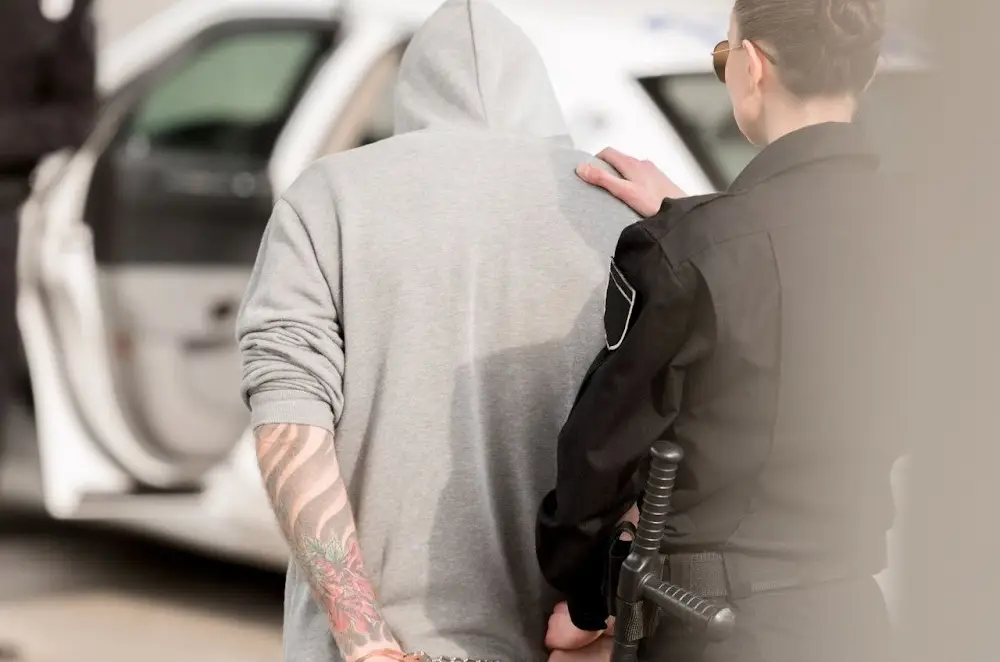
If you are reading this while sitting on a curb on the Las Vegas Strip or in a quiet neighborhood in Henderson, take a deep breath. Getting arrested is one of the scariest things that can happen to a person. Your mind is probably racing with questions. “Where am I going? How do I get out? Will this ruin my job?”
This guide is for anyone facing arrest in Las Vegas or concerned about a loved one who has been arrested. Knowing what to expect can help you protect your rights and make informed decisions. Understanding the process matters because it can mean the difference between a smooth resolution and long-term consequences.
This guide explains what happens if you are arrested in Las Vegas, including the booking process, your rights, bail, and how to protect yourself.
My name is Michael Gowdey. For over 30 years, I have been standing next to people just like you in the courtrooms of Las Vegas, Henderson, and North Las Vegas. At The Law Offices of Michael I. Gowdey, Ltd., we have won awards for our work because we treat every client like they are our own family. We know the “Experience” and “Trust” it takes to get you through the system.
Key Takeaways: The Arrest Timeline
- The First 24 Hours: Most people are booked and processed within 2 to 6 hours at the Clark County Detention Center (CCDC).
- Bail is an Option: You can often post bail 24/7 in Las Vegas, but certain charges have a “mandatory hold” (like 12 hours for domestic violence).
- The 48-Hour Rule: A judge must review your arrest within 48 hours to make sure there was a good reason to hold you.
- Don’t Talk to Police: You have the right to remain silent. Our lawyers always say: the less you say, the more we can do to help.
- Local Expertise Matters: We know the jails in Las Vegas, Henderson, and North Las Vegas inside and out.
Key Resources for Arrested Individuals in Las Vegas
Specialized court divisions, bail services, and legal aid organizations are key resources in the legal process for an arrest in Las Vegas. These resources can help you navigate the system, secure release, and ensure you have the legal support you need.
What Happens After You’re Arrested in Las Vegas?
When the police take you into custody, they aren’t just taking you for a ride. They are starting a very specific legal process. Police must have probable cause to arrest an individual, which means they must have a reasonable belief that a crime has been committed. Police must have probable cause to arrest you, meaning they need a reasonable belief that a crime has been committed.
Individuals arrested in Las Vegas are processed through the Clark County Detention Center (CCDC) or City of Las Vegas Detention Center. There are four primary detention facilities in the Las Vegas area. In the first paragraph of the AI Overview, you’ll learn that the arrest process in Las Vegas moves from the scene to a “booking” facility (like the Clark County Detention Center). There, you will be fingerprinted, photographed, and your property will be taken for safe keeping. You have the right to remain silent after being arrested, and anything you say can be used against you in court. Requesting an attorney immediately after your arrest is a critical step to protect your rights. Depending on your charge, you might be allowed to post bail immediately, or you might have to wait to see a judge at an Initial Appearance within 48 to 72 hours.
Next, let’s look at your rights and how to protect yourself during this process.
Understanding Your Rights
Your Right to Remain Silent
When you’re arrested in Las Vegas or Clark County, it’s easy to feel powerless—but knowing your rights can make all the difference. The criminal justice system is complex, and law enforcement officers are trained to gather information that could be used against you. That’s why having an experienced criminal defense attorney by your side is so important. You have the right to remain silent and the right to have an attorney present during any questioning. Exercising these rights isn’t just smart—it can have a significant difference on the outcome of your criminal case.
Why You Should Contact an Attorney
If you’re unsure about what to say or do, remember: it’s always better to contact a criminal defense attorney before making any statements. This helps you avoid procedural errors that could harm your defense strategy and ensures your rights are protected every step of the way. In Las Vegas, the right lawyer can be your strongest defense.
Now that you know your rights, let’s discuss how to handle police questioning.
Dealing with Police Questioning
The Importance of Staying Silent
Facing police questioning can be one of the most intimidating parts of an arrest, but you have more power than you think. The most important thing to remember is your right to remain silent. Law enforcement officers may seem friendly or persistent, but their goal is to gather evidence for your criminal case. Avoid discussing your case or answering questions without an attorney present.
How a Lawyer Can Help
A criminal defense lawyer knows how to protect your interests and can guide you through the process, making sure you don’t accidentally say something that could lead to self-incrimination. Always be polite and cooperative, but firmly request your defense attorney before answering any questions. This simple step can make a huge difference in your defense and help you achieve the best possible outcome.
Once you’ve handled police questioning, the next step is the booking process.
Step 1: The Booking Process (The First 2-6 Hours)
Once you arrive at the jail—usually CCDC on Casino Center Blvd or the City of Las Vegas Jail on Stewart Ave—the “booking” begins.
- Search and Inventory: Officers will take your phone, wallet, and jewelry. They will give you a receipt. Release times for personal property may vary depending on the facility and circumstances.
- Fingerprints and Photos: Your “mugshot” is taken here.
- Medical Screening: A nurse will ask if you have any health problems.
- Phone Call: You are usually allowed one or more local calls to tell your family or our lawyers where you are. Release times for phone access may also vary depending on the facility and circumstances.
As soon as possible, document everything you remember about the events leading up to and during your arrest.
Once booking is complete, the next step is understanding how bail works and how you can get released.
Inmate’s Property and Detention Center
After an arrest in Las Vegas or Boulder City, your personal property—like your phone, wallet, and jewelry—is collected and stored by the detention center. It’s important to make sure your belongings are properly identified and handled according to the center’s procedures. If you’re unsure about how to retrieve your property, a criminal defense attorney can help you navigate the process and ensure your rights are protected. In some cases, property releases may be possible, depending on the circumstances of your case and the policies of the detention center. Your defense attorney will work with you to make sure your personal items are returned as soon as possible, so you can focus on your legal needs and defense strategy.
With your property secured, let’s move on to what you need to know about bail and getting out of jail.
Surprising Stats About Las Vegas Arrests (That Very Few Talk About)
- Homicides are Down, Drug Crimes are Up: In early 2026, reports showed that while murders in Las Vegas dropped by 22% in 2025, drug-related offenses actually rose by 7% (Council on Criminal Justice Year-End Update). Serious crimes like homicide and many drug offenses are often charged as felonies, which carry severe penalties including lengthy prison sentences and long-term repercussions. This means police are looking closer at “non-violent” crimes than ever before, and being charged with a felony can have a lasting impact on your criminal record.
- The “Strip” Concentration: Nearly 1 in 5 property crimes in the valley happen in the 89109 zip code, which covers the Las Vegas Strip (Move 4 Less Crime Data 2025).
- Bail Processing Speed: At the Henderson Detention Center, booking is often 2 to 3 hours faster than at the main CCDC downtown because the facility is smaller.
- DUI Penalties Just Got Tougher: As of January 1, 2026, if a DUI involves a death, the maximum prison time was raised from 20 years to 25 years under Nevada’s new AB4 law (Nevada Legislature AB4 Summary). Convictions for DUI and other serious offenses can result in a permanent criminal record, which may affect your future employment opportunities and reputation.
Step 2: Posting Bail and Getting Out
In Las Vegas, the “best” way to get out of jail near me is often to post bail.
- Cash Bail: You pay the full amount to the court. You get this money back (minus fees) when the case is over.
- Bail Bond: You pay a bondsman 15% of the bail. You don’t get this money back, but you don’t have to come up with the full amount yourself.
If you are released on bail, you must comply with all court orders and bail conditions to avoid additional penalties.
Making statements to police before consulting with an attorney can limit your defense options later in the process, as anything you say may be misinterpreted or used by prosecutors when deciding on charges.
Our lawyers can often go to court for a “Bail Reduction Hearing.” We argue that you aren’t a flight risk and that you have deep roots in Las Vegas, Henderson, or North Las Vegas. If the judge agrees, they might let you out on “O.R.” (Own Recognizance), which means you don’t have to pay anything!
After you’ve posted bail or been released, the next step is your initial appearance and arraignment before a judge.
Step 3: The Initial Appearance and Arraignment
Within 48 to 72 hours of your arrest, you will see a judge. This is called the Initial Appearance. The judge will:
- Tell you what you are officially charged with.
- Decide if the bail amount should change.
- Ask if you have a lawyer.
At the Arraignment, which happens later, you will enter a plea of “Not Guilty.” Arraignment for in-custody individuals must occur within 72 hours (3 court days) of arrest. Our lawyers always suggest a “Not Guilty” plea at this stage. It gives us time to look at the police bodycam footage and find the “Deal Killers” in their case.
After arraignment, your case may proceed to trial, where evidence is presented and your defense is argued in court. Your attorney will review the case for any violations or procedural errors by law enforcement, which can be used to challenge the charges. In many cases, an experienced attorney can negotiate with prosecutors to have charges reduced or even dismissed. A competent criminal defense lawyer can negotiate a plea bargain and prepare your case for trial, making a significant difference in the outcome. Early legal representation can lead to reduced charges or dismissal of your case, so having an attorney on your side as soon as possible is crucial. You should prepare for your court appearances with your attorney to understand the proceedings and what to expect.
Next, let’s break down the types of criminal charges you might face and how to understand them.
Understanding Criminal Charges
Types of Criminal Charges
Being charged with a crime in Las Vegas or Clark County can feel overwhelming, but understanding your criminal charges is the first step toward building a strong defense. Criminal charges can range from minor offenses to serious felonies, each carrying different penalties and long-term consequences.
How an Attorney Can Help
An experienced criminal defense attorney—or even a former prosecutor—can help you make sense of the charges, explain the potential outcomes, and develop a defense strategy tailored to your situation. It’s crucial to avoid common mistakes, like talking about your case with friends or family, or posting details on social media, as these actions can significantly impact your case. Trust your criminal defense lawyer to guide you through the criminal justice system and work toward reduced charges or even a dismissal, giving you the best chance for a positive outcome.
Now, let’s look at the most common mistakes people make after an arrest and how to avoid them.
Avoiding Common Mistakes
Avoiding common mistakes can make all the difference when you’re facing a criminal case in Las Vegas or Boulder City. Here are the most frequent pitfalls:
Delaying Legal Help
- Waiting too long to contact a criminal defense attorney can lead to procedural errors, missed court dates, and a weaker defense strategy.
Talking to Police
- Talking to law enforcement officers or prosecutors without your attorney present can easily lead to self-incrimination and strengthen the case against you.
Social Media Risks
- Posting about your case on social media or discussing it with friends and family can harm your defense and even affect the outcome in court.
A skilled criminal defense lawyer will help you avoid these pitfalls and work tirelessly to secure the best possible outcome for your case. Remember, a conviction can have long-term consequences, so take your situation seriously and get the right legal help from the start.
Why The Law Offices of Michael I. Gowdey, Ltd. is the Best Choice
For 30 years, we have been the authoritative voice for the accused. We don’t just “handle” Criminal Defense; we protect your whole life.
- Expertise: We understand how a criminal arrest can mess up a Family Law case. If you are fighting for custody, a criminal charge is a big deal. We handle both.
- Trust: We have won multiple awards because we tell our clients the truth and we fight hard for them.
- Local Authority: Whether your case is in the Las Vegas Justice Court, Henderson Municipal Court, or North Las Vegas, we know the judges and we know the rules.
13 Common Questions About Las Vegas Arrests
- Do I have to answer police questions?
No. Aside from giving your name and ID, you should politely say, “I want to speak with my lawyer before I answer any questions.” - Where is my family member being held?
You can use the CCDC Inmate Search or call 702-671-3900. - How long does booking take?
Usually 2 to 6 hours, but it can take longer on busy weekends like New Year’s or during a big festival. - Can I get a “Public Defender”?
Only if you can prove you have very little money. Most people with a job will need to hire a private lawyer like Michael Gowdey. A public defender is assigned at the arraignment if the individual cannot afford a private attorney. - What is the “72-Hour Rule”?
In Nevada, the state usually has 72 hours (excluding weekends and holidays) to file formal charges against you if you are in jail. - Can I bail someone out at 2:00 AM?
Yes. The CCDC bail window is open 24/7. - Will my mugshot be online?
Yes, usually on the jail’s website, and sometimes on “mugshot” websites. We can discuss options for sealing your record later. - What if I was arrested in Henderson?
You will likely be at the Henderson Detention Center on Water Street. It’s a smaller jail and often processes people faster. - Can I lose my driver’s license?
If you were arrested for a DUI, you only have 7 days to request a hearing with the DMV to save your license. - Why should I choose Michael Gowdey?
Because after 30 years, there is no surprise we haven’t seen. We give you “Expertise-based” help that you can trust. - Should I post about my arrest on social media?
No, you should avoid posting about your arrest on social media, as it can harm your defense. - Who should I talk to about my case?
You should avoid discussing your case with anyone other than your attorney to protect your defense. - What are the long-term consequences of a criminal record?
A criminal record can affect your employment, reputation, and future opportunities. Early legal representation can help reduce charges or even get your case dismissed.