
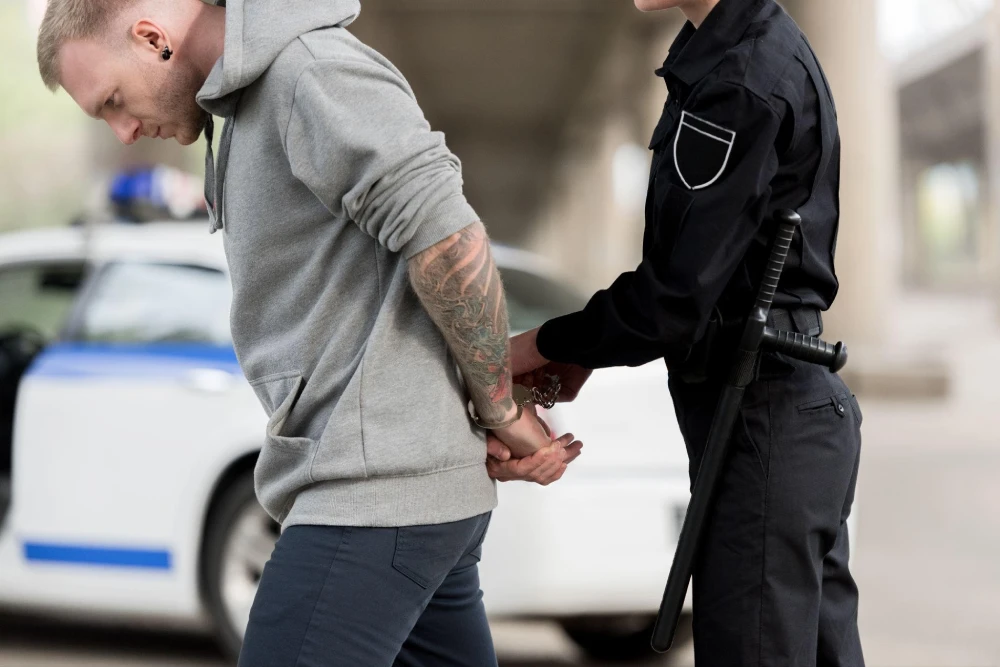
What to Do After Arrest in Las Vegas: Immediate Steps, Rights, and Why It Matters
If you or a loved one has just been arrested in Las Vegas, knowing exactly what to do after arrest in Las Vegas is critical. This guide is for individuals arrested in Las Vegas or their families, providing clear, actionable steps to protect your rights and your future. The moments after an arrest are overwhelming, but what you do next can make all the difference in your case outcome. Understanding the process, your rights, and the importance of each decision is essential to avoid mistakes that could jeopardize your defense.
Quick Reference: Immediate Steps to Take After an Arrest in Las Vegas
- Stay Calm: Remaining calm and composed is crucial to avoid worsening the situation.
- Invoke Your Rights: Clearly state, “I am choosing to remain silent and I want my lawyer.” Invoke your right to remain silent and request a criminal defense attorney immediately after an arrest in Las Vegas.
- Do Not Discuss Your Case: Do not discuss your case with police, cellmates, family, or on social media after an arrest. Recordings of jail calls can be used as evidence, so avoid discussing case details during those calls.
- Refuse Searches: Refuse to consent to searches by politely stating you do not consent, unless officers have a warrant.
- Document Everything: It is important to document the details surrounding your arrest as soon as possible, as this information can be crucial for your defense.
- Contact an Attorney: Reach out to an experienced criminal defense attorney as soon as possible.
Introduction to Arrests in Las Vegas
Most individuals arrested in Las Vegas will find themselves headed to either the Las Vegas City Jail or the Clark County Detention Center, depending on the arresting agency’s jurisdiction and where the alleged crime occurred. The arresting agency’s jurisdiction is crucial because it determines not only which detention facility will hold the individual, but also the specific legal processes and procedures that will follow. Knowing the correct jurisdiction helps families and attorneys identify the right facility for inmate searches and ensures the proper legal steps are taken based on the authority involved.
Getting arrested in Las Vegas, Nevada, is a moment that can change the course of your life in an instant. Whether your first encounter with law enforcement officers happens on the Strip, in a quiet neighborhood, or anywhere else in the city, the experience is often fast, confusing, and intimidating.
In these critical first moments, your actions can significantly impact your future. Acting aggressively or resisting officers will only make things worse and could lead to additional charges. Instead, it is essential to stay calm, follow instructions, and remember that you have rights under the law. The Fifth Amendment guarantees your right to remain silent, protecting you from self-incrimination. You are only required to provide basic identifying information—nothing more. Understanding the process and your rights is crucial for your defense and can make all the difference as your case moves through the criminal justice system. If you find yourself in this situation, remember: staying silent and seeking the guidance of an experienced criminal defense attorney is the smartest move you can make to protect your future.
What Should I Do Immediately After an Arrest in Las Vegas?
After an arrest, it is crucial to remain calm and composed to avoid worsening the situation. The next hour of your life is the most important one you will ever have.
I’m Attorney Michael Gowdey. For over 30 years, I have been the voice for the accused at The Law Offices of Michael I. Gowdey, Ltd. We are committed to guiding our clients through every step of the legal process and advocating for their rights and future. We have won awards and “highly rated” badges, but what matters most is our experience in these specific streets. I’ve seen 2026 start with some wild trends, and I want to make sure you don’t become just another number in the system.
The sooner you begin working with a criminal defense attorney, the better your chances of achieving a favorable outcome.
Stay Silent
- You cannot talk your way out of an arrest, but you can definitely talk your way into a conviction. Say: “I am choosing to remain silent and I want my lawyer.” Invoke your right to remain silent and request a criminal defense attorney immediately after an arrest in Las Vegas.
Do Not Discuss Your Case
- Do not discuss your case with anyone other than your attorney to avoid compromising your defense. This includes law enforcement, friends, family, cellmates, or on social media after an arrest. Recordings of jail calls can be used as evidence, so avoid discussing case details during those calls.
Booking Process
- Expect to spend 2 to 5 hours in “Intake” at CCDC or the North Las Vegas Detention Center before you even see a bed.
DUI Arrests
- If you were arrested for a DUI, you only have 7 calendar days (not business days!) to request a DMV hearing or you lose your license automatically (Source: Nevada DMV).
Arrest Trends
- While homicides in Las Vegas dropped 22% in 2025, sexual offenses and certain drug crimes actually saw an uptick (Source: LVMPD/Review-Journal).
Document Everything
- Be a great “historian”: It is important to document the details surrounding your arrest as soon as possible, as this information can be crucial for your defense. As soon as you get to a phone or a pen, note and write down every detail about your arrest. Did the officer use a turn signal? Did they read your rights before or after the search? These tiny details are the “deal killers” for the prosecution.
Understanding Miranda Rights
Miranda rights are a cornerstone of the criminal justice system, designed to ensure that individuals arrested by law enforcement officers in Las Vegas and across Nevada are protected from self-incrimination. These rights include the right to remain silent and the right to have an attorney present during any questioning. The right to remain silent and the right to an attorney are both protected by the Fifth and Sixth Amendments, and are explicitly stated in the Miranda warning. Law enforcement is required to inform you of your Miranda rights before conducting a custodial interrogation, but not necessarily at the moment of arrest. This means you might be taken into custody and booked before hearing these rights read aloud.
It is essential for individuals arrested to understand that anything said to officers after being taken into custody can be used in court, unless you clearly invoke your right to remain silent and request an attorney. By stating, “I am choosing to remain silent and I want my attorney present,” you activate these protections and prevent law enforcement from using your statements against you. An experienced criminal defense attorney can review your case, ensure your Miranda rights were properly respected, and fight to have any improperly obtained evidence dismissed.
If you are facing charges, staying calm, refusing to answer questions without your attorney, and contacting an experienced attorney as soon as possible are crucial steps. This approach not only supports your defense but also gives you the best possible outcome as your case moves through the criminal justice system, from the initial arrest to trial. Remember, your rights are your shield—use them wisely and seek professional legal support to protect your future.
Once you understand your rights, it’s important to know what happens next during the booking process.

Where Will I Go After Being Arrested in North Las Vegas or Henderson?
In the Las Vegas area, your destination depends on who put the handcuffs on you. It’s a “geographic lottery” that determines how fast you can get out.
1. Clark County Detention Center (CCDC)
If the Las Vegas Metropolitan Police (Metro) arrested you on the Strip or in the “unincorporated” parts of the city, you’re going to 330 S. Casino Center Blvd. This is the “big house.” It handles thousands of people a day.
- The Stat You Didn’t Know: CCDC is often at or near capacity. In 2024, Clark County represented 74% of all court cases in Nevada. Because it’s so busy, “standard” booking takes longer here than anywhere else in the state.
2. North Las Vegas Detention Center
If the North Las Vegas Police picked you up, you’ll start at their facility on Stewart Ave.
- The “Transfer” Risk: This facility is smaller. If they run out of room, you will be transferred to CCDC within 6 to 24 hours. If you’re trying to post bail, your family needs to know exactly which building you are in right now.
3. Henderson Detention Center
Henderson is known for being very efficient. If you’re arrested there, you stay in Henderson. Their booking process is usually a bit faster than the chaos of downtown Vegas, but their bail requirements can be just as strict.
What Are the 3 Most Important Rights I Have During a Vegas Arrest?
Most people can recite the Miranda rights from watching Cops, but very few people actually use them correctly in real life. If you are arrested, you should politely inform the arresting officers that you wish to exercise your right to remain silent. Additionally, you should request to speak with an attorney before answering any questions. This helps protect you from self-incrimination and ensures your rights are upheld.
1. The Right to Remain Silent (The 5th Amendment)
You have to give the police your name and address. That’s it. You don’t have to tell them where you were coming from, how many drinks you had, or whose bag that is.
- The “Small Talk” Trap: Officers are trained to be friendly during the ride to jail. They might ask about your kids or your job. Do not engage. They are listening for anything that sounds like a confession or a lie. Never try to explain your side of the story to the police without your attorney present, as anything you say can be used against you.
Remember, Miranda rights must be read to you before a custodial interrogation, not necessarily at the time of arrest.
2. The Right to an Attorney (The 6th Amendment)
The moment you say the “Magic Words”—“I want an attorney”—the police are legally required to stop asking you questions about the crime. If they keep talking, anything you say after that might be “thrown out” of court. If you cannot afford a private attorney, you have the right to a court-appointed public defender.
3. The Right to Refuse a Search
Unless they have a warrant or an emergency (like seeing a gun in plain sight), you do not have to let them search your property, including your car, your house, or your personal belongings. Law enforcement typically needs a warrant to search private property. If they ask, “You don’t mind if I look in the trunk, right?” you should say, “I do not consent to any searches.” Refuse to consent to searches by politely stating you do not consent, unless officers have a warrant. Even if they do it anyway, your lawyer can use your refusal to fight the evidence later.
The Booking Process: What to Expect in 2026
Booking is a “medical and digital” assembly line. Here is the path you’ll take:
- Inventory: They take your belt, your shoelaces, your phone, and your jewelry. Everything is put in a bag.
- Medical Screen: They check if you are sick or hurt. Be honest about medical needs, but do not talk about how you got hurt if it involves the crime.
- Fingerprints & Photos: The subject will be properly identified, usually through fingerprinting and official documentation, before any bail or release procedures can begin. Your prints go into a national database that checks for warrants in all 50 states.
- The “One Call” (Myth vs. Reality): Nevada law doesn’t specify “one call,” but they must give you “reasonable access” to a phone to call a lawyer or a bail bondsman. Some facilities may also allow communication or document transmission via fax.
The booking facility holds both subjects awaiting trial and those already convicted of crimes.
After the booking process, individuals arrested in Nevada may be eligible for release on bail. Bail is a sum of money paid to the court to secure your release while awaiting trial. You can pay the full bail amount or use a bail bondsman, typically costing 15% of the total bail. If the individual cannot afford bail, their attorney can argue for reduced bail or an alternative form of release. Most individuals arrested in Nevada will have the right to post bail after being processed. If bail is posted, it is crucial to comply with all court orders and bail conditions to avoid penalties.
Arraignment is your first court appearance, usually within 48 to 72 hours, where you are formally charged and enter a plea.
O.R. release (Own Recognizance) means you are released from custody without paying bail, based only on your promise to return for court.
After understanding the booking process, it’s important to know what questions and concerns commonly arise after an arrest in Las Vegas.
10 Common Questions About Being Arrested in Las Vegas
Legal Rights
Q1: Can I be arrested for an open container on the Strip?
A: Yes, if it’s in glass or if you’re within 1,000 feet of a liquor store. Street rules are different from car rules!
Q2: Can police search my phone after an arrest?
A: Generally, no, they need a separate warrant to go through your digital data unless there is a life-threatening emergency.
Q3: What happens if they didn’t read me my Miranda rights?
A: It doesn’t mean the case is automatically dismissed, but it does mean your “confessions” might be banned from the trial. What happened during your arrest, including whether your rights were read, can affect how evidence is used in court.
Bail and Release
Q4: How soon will I see a judge?
A: Usually within 48 to 72 hours for an “Arraignment” or a “72-hour hearing.”
Definition: Arraignment is your first court appearance where you are formally charged and enter a plea.
Q5: Is bail higher for out-of-state visitors?
A: Sometimes. Judges may see you as a “flight risk” and set a higher bond to make sure you come back for trial.
Q6: What is “O.R.” release?
A: It stands for “Own Recognizance.” It means you get out without paying money, based only on your promise to return.
Q7: How do I pay bail?
A: You can pay the full bail amount or use a bail bondsman, typically costing 15% of the total bail.
Post-Arrest Procedures
Q8: What if I’m a tourist and have to fly home?
A: The court does not care about your flight. If you leave without addressing the case, a Bench Warrant will be issued, and you could be arrested at the airport next time you travel.
Q9: Can I record my own arrest?
A: Yes, as long as you aren’t physically interfering with the officers. Your phone is your best witness.
Q10: How do I find out where someone is being held?
A: Use the CCDC Inmate Search website or call the North Las Vegas Detention Center directly. The website provides public access to inmate information, but be aware of its limitations and legal disclaimers regarding data accuracy and appropriate use.
Consequences and Legal Representation
Q11: Why should I hire Attorney Michael Gowdey?
A: Because with 30 years of experience and multiple awards, we know the “short cuts” and the “traps” in the Clark County system. We don’t just defend you; we protect your future.
Q12: What are the long-term consequences of a conviction in Nevada?
A: A conviction for any crime in Nevada can have long-lasting consequences beyond fines and jail time. You could face difficulty finding employment, and certain convictions may result in the loss of your right to own firearms.
Q13: What penalties do different crimes carry in Nevada?
A: Crimes like DUI, drug possession, or domestic violence carry significant penalties in Nevada. More serious offenses such as armed robbery, sexual assault, or homicide can result in decades behind bars.
Conclusion: You Controlled the Response, Now Let Us Control the Case
An arrest is a terrifying moment, but it is not the end of the story. At The Law Offices of Michael I. Gowdey, Ltd., we have spent three decades turning “scary moments” into “legal victories.” Whether you’re facing a Family Law battle or a serious Criminal charge, we are the expertise-based, authoritative voice you need in your corner.
Don’t wait. The first 24 hours are the most critical.
👉 Click here to schedule an immediate consultation with Attorney Michael Gowdey
⚖️ Disclaimer: This article provides legal information, not legal advice. Every case is different. To protect your rights, consult with a qualified attorney at our firm.