
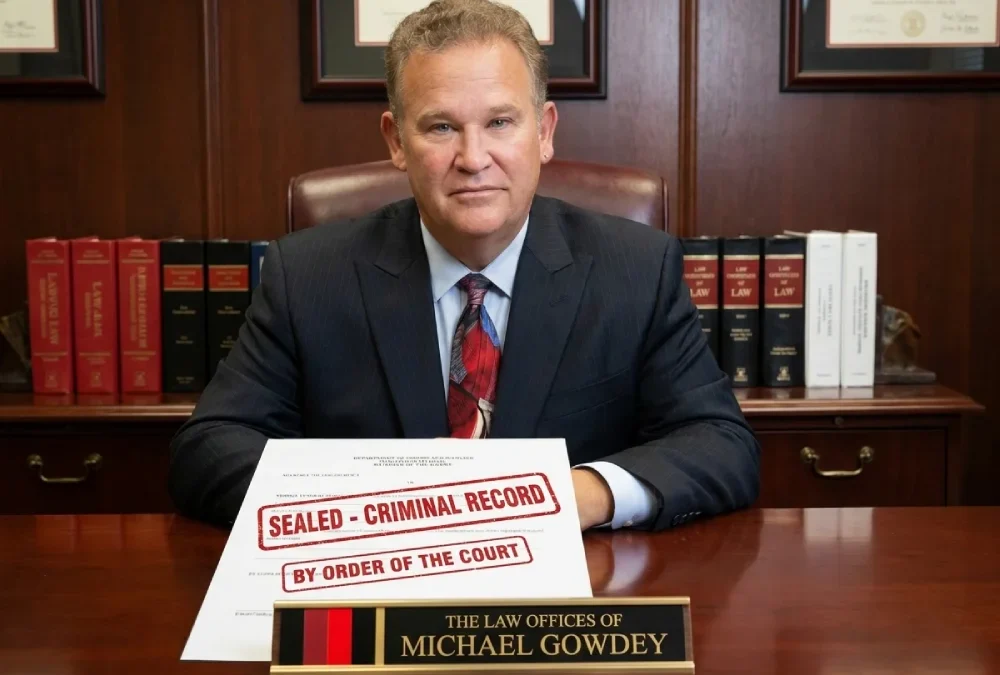
A criminal record is a heavy chain. Even if you served your time, paid your fines, and stayed completely out of trouble, that old arrest still haunts you. When you apply for a good job on the Strip, they run a background check. When you try to rent a safe apartment in Henderson, they run your name. And just like that, the door slams in your face.
You feel trapped. You did what society asked, but society refuses to let you move on.
My name is Michael I. Gowdey. I have fought for people in Clark County for over 30 years as a trial lawyer. I know how unfair this system can be. But you have a legal way out. Nevada allows you to seal your record, wipe the slate clean, and legally deny the arrest ever happened. The laws are strict, and the paperwork is heavy, but it can be done. Here is my straight-talking, step-by-step guide to sealing your criminal record in Clark County this year.
Key Takeaways
- Nevada does not expunge (destroy) records; it seals them from public view.
- Waiting periods range from zero days for dismissed charges to ten years for severe felonies.
- Certain crimes, like felony DUI and sex offenses, can never be sealed under any circumstances.
- Once sealed, you are legally allowed to tell employers and landlords that you have no criminal history.
What is the difference between sealing and expunging a record in Nevada?
Nevada does not offer true expungement, which means destroying the record. Instead, we seal records. When a record is sealed, it is completely hidden from the public, employers, and landlords. Legally, the proceedings are deemed never to have occurred, allowing you to honestly say you have no criminal history.
In some states, a judge literally shreds the file. Here, the Clark County District Court puts a massive lock on it.
Once your record is sealed, if an employer runs a background check, it comes back completely blank. If a nosey neighbor looks you up, they see nothing. There are very few exceptions. Only specific state agencies—like the Nevada Gaming Control Board if you apply for a gaming license—can look past the seal. For the rest of the world, your past is invisible.
How long do I have to wait to seal my Nevada criminal record?
The waiting period starts the day your case is fully closed, including parole, probation, and paying all fines. Misdemeanors usually require a one-to-two-year wait. Most felonies take two to ten years. Dismissed or acquitted charges have no wait time and can be sealed immediately.
You cannot just ask the judge to seal your record the day you get out of jail. You must wait a specific amount of time to prove you are rehabilitated. The clock strictly starts the day your sentence is totally complete. If you finished probation in 2020 but did not pay your final court fee until 2024, your waiting period started in 2024.
Here is exactly how long you must wait under Nevada Revised Statute (NRS) 179.245:
| Type of Criminal Charge | Required Waiting Period |
| Acquitted or Dismissed Charges | No wait time (Eligible immediately) |
| Standard Misdemeanors | 1 year |
| Gross Misdemeanors | 2 years |
| Category E Felonies | 2 years |
| Misdemeanor Domestic Violence / DUI | 7 years |
| Category B, C, or D Felonies | 5 years |
| Category A Felonies / Burglary | 10 years |
[Insert link to NV .gov source on NRS 179.245 wait times]
What crimes can never be sealed in Nevada?
Under Nevada law, certain highly serious offenses are permanently ineligible for record sealing regardless of how much time passes. You can never seal a felony DUI, any sexual offense, crimes against children, or home invasion with a deadly weapon without receiving a full, official Governor’s pardon.
Some mistakes carry permanent marks. If you have a conviction for any of these specific crimes, the Clark County District Attorney will aggressively block your petition. The only way to clear these specific charges is to take your case directly to the Nevada Board of Pardons Commissioners and ask the Governor for mercy. [Internal Link: Las Vegas Criminal Defense page].
What are the exact steps to seal a record in Clark County?
To successfully seal your record in Clark County, you must first obtain your SCOPE criminal history from Metro Police. Then, you draft a formal petition, send it to the Clark County District Attorney for a stipulation, and submit the final order to the District Court judge.
The process is heavily bureaucratic. The courts reject paperwork for a single typo. Over my three decades practicing law, I have streamlined this process for my clients. If you try to do it yourself, follow these steps perfectly.
Your Record Sealing Preparation Checklist
- Get your SCOPE Report. Head to the Las Vegas Metropolitan Police Department Records Bureau and request your “Shared Computer Operations for Protection and Enforcement” (SCOPE) printout.
- Order your official state history. Mail a request to the Nevada Department of Public Safety (DPS) in Carson City to get your state-level criminal history report.
- Draft your Petition. You must list every single arrest, citation, and conviction perfectly.
- Submit to the District Attorney. We send the paperwork to the DA’s office to get a “Stipulation.” This means the prosecutor agrees you meet the rules and will not fight your request.
- Get the Judge’s Signature. Once the DA signs, we hand it to the judge. If the DA refuses to sign, we demand a formal hearing in court to fight for you.
- Notify the agencies. A signed order does nothing if nobody knows about it. My team mails the signed order to Metro, the DMV, the FBI, and every other agency so they can physically hide the files.
Will sealing my record restore my Nevada gun rights?
No. While sealing your Nevada criminal record will immediately restore your civil rights to vote, hold public office, and serve on a jury, it does not give you your gun rights back. The only way to restore your Second Amendment rights is by securing a formal pardon.
People always ask me this. When a judge seals a felony conviction, the law gives you back your voting rights automatically. But your right to own or carry a firearm is separate. Sealing a record hides it from the public, but it does not erase the fact that you were convicted of a felony in the eyes of federal gun laws.
What are the most common mistakes to avoid during this process?
Clark County judges routinely deny record sealing petitions if you apply before your statutory waiting period is over, have outstanding warrants, or fail to disclose every single past arrest. Trying to hide an old charge or missing a minor traffic detail will ruin your entire petition.
The District Attorney looks for reasons to say no.
Common Mistakes to Avoid:
- Forgetting out-of-state arrests. If you were arrested in California ten years ago, you must disclose it, even if we are only sealing your Nevada record.
- Applying too early. Miscalculating your wait time by just one day means an automatic denial.
- Having new active cases. If you have a brand new unpaid traffic ticket, the judge will freeze your sealing petition until that new ticket is fully closed. [Insert accurate Clark County statistic here regarding annual record sealing denials].
Frequently Asked Questions About Nevada Record Sealing
Do I need a lawyer to seal my record?
You are not legally required to have a lawyer. However, the paperwork is extremely dense. A single mistake delays the process by months. Hiring a skilled trial lawyer ensures the process is done fast and accurately.
How long does the sealing process take in Clark County?
Because the courts and the Department of Public Safety are backed up, the entire process takes anywhere from six to ten months from the day we request your records to the day the judge signs the final order.
Can the Nevada Gaming Control Board still see my sealed record?
Yes. If you apply for a high-level gaming license to work on the casino floor, the Gaming Control Board has statutory permission to view sealed records. You must disclose your past to them, even if the record is sealed.
What happens if the District Attorney refuses to sign the stipulation?
If the DA finds a reason to deny your petition, they will refuse to sign. When that happens, my firm files a motion to force a contested hearing in front of a Clark County District Court judge. I will argue directly to the judge why you deserve a second chance.
Does sealing my record clear my FBI background check?
Yes. As part of my firm’s process, we mail the final signed court order to the Nevada Department of Public Safety. DPS then updates the national databases, which forces the FBI to remove your charges from their background checks.
Can I seal a record if I got a Dishonorable Discharge from the military?
No. Under Nevada law, if you received a Dishonorable Discharge from the United States Armed Forces, you are strictly ineligible to ever have your criminal records sealed.
What if my case was dismissed “without prejudice”?
If a prosecutor dismissed your case “without prejudice,” it means they reserved the right to refile the charges later. You must wait until the criminal statute of limitations fully expires before you can seal that specific dismissal.
Get Representation with Heart Today
You already paid the price for your past. You should not have to keep paying for it every time you fill out a job application. The legal system wants you to jump through a hundred hoops just to get your basic dignity back. Do not try to navigate this frustrating maze alone.
My firm, The Law Offices of Michael I. Gowdey, LTD., operates on one core belief: Justice with Integrity. Representation with Heart. I have the experience to cut through the red tape, force the system to act, and get your record permanently hidden.